
Losing her hair is never annoyed. Androgenetic alopecia affects nearly 70% of men and 40% of women throughout their lives, well beyond a mere aesthetic concern. This gradual fall can profoundly undermine self-esteem and transform social relationships. In this context, knowing about existing solutions, especially hair transplant, becomes crucial to making informed choices about hair health.
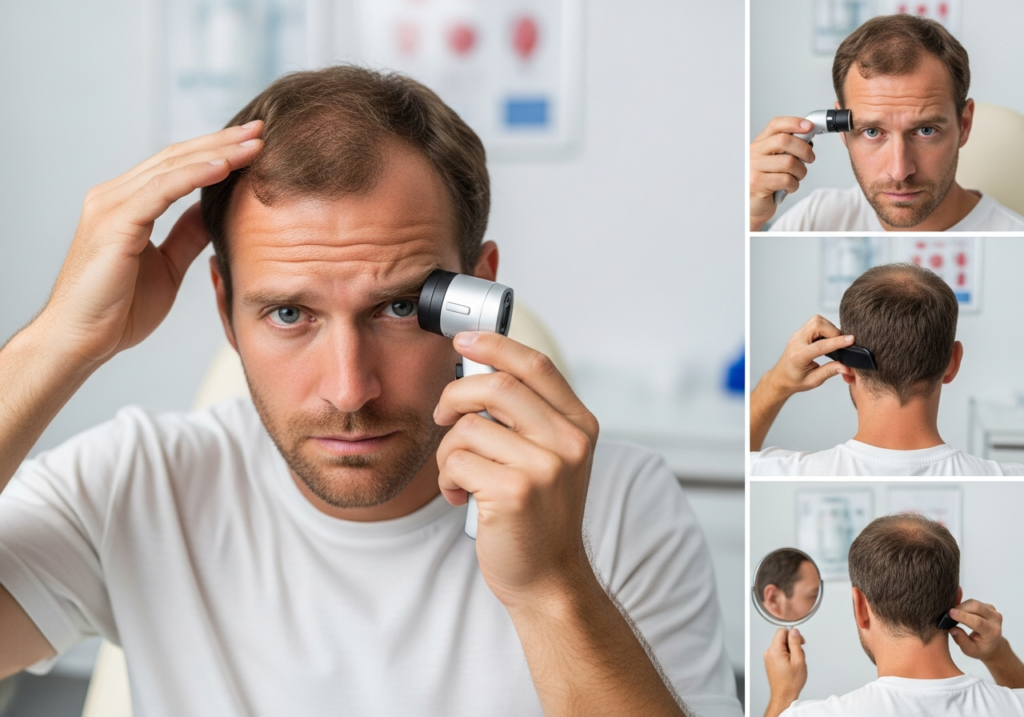
What is hair transplant?
The principle of capillary grafting is genius in its simplicity: collect healthy hair follicles in a donor area (usually the neck and temples) to implant them where hair is scarce. This approach takes advantage of a remarkable genetic peculiarity: the hair on the back and sides of the skull naturally resists androgenetic alopecia.
Two techniques are shared according to their sampling method. The FUT (Follicular Unit Transplantation) consists of cutting a thin strip of scalp, while the FUE (Follicular Unit Extraction) extracts each follicular unit one by one. Each method offers its own advantages depending on the patient profile and the extent of baldness.
The root of the problem: why do you lose your hair?
The androgenetic alopecia originates in a cocktail of genetic and hormonal factors. Dihydrotestosterone (DHT), resulting from the transformation of testosterone, causes a gradual shrinking of the hair follicles in genetically vulnerable people.
However, other elements can precipitate the fall: stress that settles permanently, iron or vitamin deficiencies in group B, thyroid disorders, or some medicines. Let us take the example of this 35-year-old patient who has managed to significantly curb hair loss after having detected and treated an iron deficiency, thus delaying the need for surgery for several years.
The process of a hair transplant: step by step
It all starts with careful consultation which examines the quality of the donor area, the extent of baldness and the patient's hopes. This tailor-made assessment is used to determine how many plugins will be needed and what technique is best suited.
The operation, carried out under local anaesthesia, revolves around several key moments: preparation of donor and receiving areas, extraction of follicles, making microscopic incisions and delicate implantation of grafts. Count between 4 and 8 hours Depending on the size of the session, the patient remains comfortable with local anesthesia.
The thoroughness of this procedure directly conditions the natural aspect of the final result, with a gradual regrowth that spreads over 6 to 12 months.
What to expect: results and recovery
The post-operative period follows a fairly predictable schedule. Transplanted grafts fall first within 2-3 weeks of surgery – a very normal phenomenon called "postoperative shock". The real regrowth starts around the 3rd month, gaining in intensity until the 12th month.
The first few days require some precautions: avoid friction, apply healing lotions and set aside intense physical activities for a week. A patient said that he saw a marked improvement in his hair density after 9 months, stressing the importance of being patient in this reconstruction process.
How can you choose your intervention?
Selecting a competent practitioner represents the keystone of success. Several aspects deserve attention: the surgeon's medical qualifications, the technologies used, the hygiene standards of the centre and the quality of post-operative accompaniment.
Choose Premium hair transplant Generally, there are high technical and aesthetic requirements. Centres of excellence stand out for their ability to achieve optimal densities while preserving the natural appearance of the hair.
Informed patients take care to check the practitioner's references, to examine genuine before/after photos and to ensure that the expected results are presented transparently.
Innovations that transform hair transplant
Technological advances constantly push this specialty. Miniaturization of tools allows finer incisions, limiting trauma and optimizing graft survival. Follicular preservation techniques maintain the viability of the sampled units longer.
The International Society of Hair Restoration Surgery (ISHRS) sets quality criteria, recommending densities of 60 to 70 grafts per square centimeter for optimal rendering. These innovations reduce visible scars and maximize the aesthetic integration of transplanted hair.
A good understanding of the hair transplant opens the way to realistic expectations and can significantly improve the quality of life. Since each route is unique, a specialist consultation remains essential to identify the approach best suited to its particular situation.